

The launch-week issue
The GTA VI Effect:
One Launch. A Week of Ripple Effects.
Vice City is about to compete with the real world for our time. What could that mean for work, creators, and brands? And which launch theories deserve a reality check?

Scheduled launch: November 19, 2026, on PlayStation 5 and Xbox Series X|S, according to Rockstar.
A workplace signal: a survey finds some workers plan to adjust their schedules. That is not evidence of an economy-wide shutdown.
The business story: attention may move quickly; lasting demand for jobs and services needs more time to establish.
Picture Thursday morning. A team chat fills with screenshots. A creator is cutting a first-impressions video. Someone has booked a perfectly legitimate vacation day to explore a fictional city. A brand manager is wondering whether the campaign scheduled for that afternoon will get a second glance.
That is the most useful way to think about Grand Theft Auto VI’s launch: as a possible collision between a shared cultural moment and thousands of ordinary workdays. The game does not have to change everything to change what people talk about, watch, buy, and make time for over the next week.
01. First, what is actually confirmed?
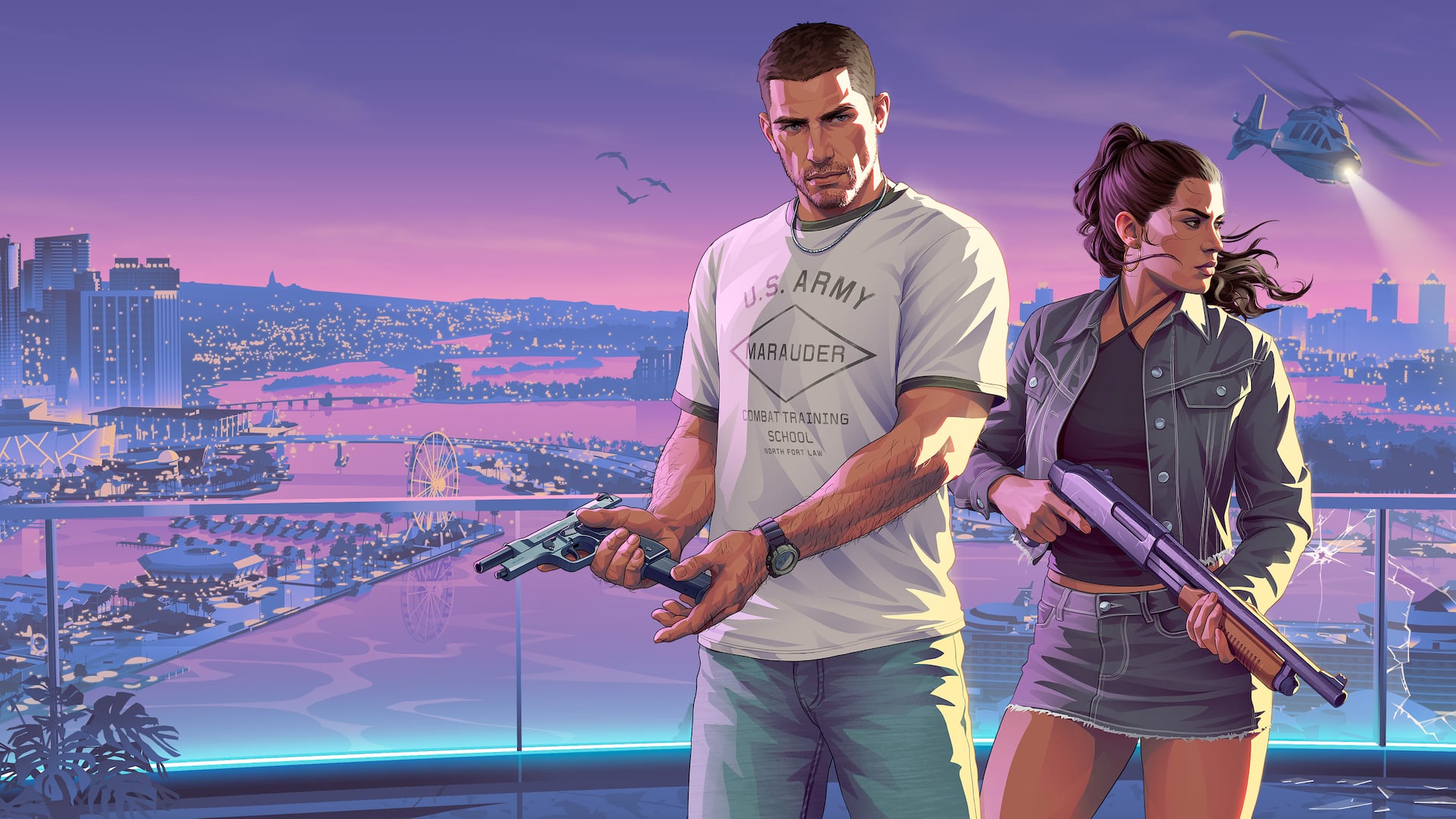
Rockstar lists November 19, 2026, as GTA VI’s release date for PlayStation 5 and Xbox Series X|S. The game returns to Vice City within the fictional state of Leonida, with Jason and Lucia at the center of the story. This article is a pre-launch assessment, not a review of the finished game.
The date gives businesses a planning point. It does not tell us how many employees will take leave, how much consumer spending will shift, or whether a creator’s launch coverage will become a sustainable business. Those are separate questions requiring separate evidence.
Confirmed details: Rockstar’s GTA VI page and release-date announcement, checked November 18, 2026.
02. The next seven days, in four moments.
The most immediate global effect may be a shared conversation crossing time zones. Clips, reactions, guides, and debates can travel far beyond the people playing. How large that effect becomes will depend on the release experience and the audience’s response.
Tap each moment to explore a possible scenario. This timeline is editorial analysis, not a forecast of measured outcomes.
NOV 18The anticipation peak
What could happen: last-minute questions, watch lists, and preparation compete for attention before release.
What to watch: customer questions and audience engagement in your own channels. A burst of social chatter does not automatically mean your buyers have disappeared.
NOV 19–20The first-impression rush
What could happen: streams and reactions shape the conversation. Some teams may notice planned absences or rearranged hours.
What to watch: whether people need useful explanations, technical help, or simply time to enjoy the game. Keep essential customer support covered.
NOV 21–22The weekend discovery phase
What could happen: discussion becomes more specific as players discover places, characters, and mechanics. Original analysis could become more valuable than another generic reaction.
What to watch: repeat questions that a genuinely helpful guide can answer. Make spoiler boundaries clear.
NOV 23–24The first reality check
What could happen: the conversation begins separating lasting interest from launch curiosity.
What to watch: repeat viewers, actual customer inquiries, and work completed. One quiet sales day or one viral post is too little evidence for a sweeping business conclusion.

Vice City at night. Official GTA VI screenshot, © Rockstar Games. The image illustrates the game’s setting, not a real-world economic forecast.
03. Work schedules may shift. The job market is a bigger question.
Zety surveyed 1,040 U.S. workers through Pollfish on October 6, 2026. Eleven percent said they planned to take time off or adjust their schedules for GTA VI. The reported figure was 22% among Gen Z respondents and 16% among millennials.
Who is planning around launch?
*Survey respondents and generational subgroups, not a census. Bars use a 0–100% scale. Source: Zety’s Launch and Leave Report.
These figures measure stated plans, including schedule changes. They do not mean that 11% of the American workforce will be absent, that time off will be unplanned, or that those hours become lost economic output. Subgroup results also come from smaller portions of the sample.
For a manager, the useful question is coverage: which commitments require someone to be available, and what has already been arranged? Treating a gaming day off like any other planned leisure time makes more sense than assuming enthusiasm is a performance problem.
Where could paid work appear?
Our analysis points to possible short-term demand around editing, thumbnails, guides, community moderation, and customer support. A creator handling a surge in material might commission an editor. A publisher might need clearer explainers. Those are plausible opportunities, not confirmed hiring announcements or a count of new jobs.
Longer-term job creation depends on repeat demand, budgets, and whether audiences stay. A busy week for freelancers can coexist with an unchanged employment outlook elsewhere. The evidence reviewed for this article does not establish a net jobs gain or loss caused by GTA VI.
A launch can rearrange a week of attention. Durable business value depends on what remains after that attention moves on.
04. The rumor room: curiosity is not confirmation.
GTA VI’s long buildup has also produced a second form of entertainment: interpreting the marketing itself. The most interesting launch “conspiracies” are often puzzles built by fans from images, dates, and coincidences. They tell us something about anticipation, but they cannot substitute for evidence.
Open a card to see the claim and its evidence status.
Did the moon reveal Rockstar’s schedule?
Fans interpreted moon phases in promotional material as hints about trailer dates. PC Gamer documented a December 2024 version combining lunar speculation with number and license-plate clues. These were audience interpretations, not an announced scheduling system.
The lesson: a pattern that seems persuasive after the fact is not necessarily useful for predicting the next announcement.
Were the delays secretly designed to manufacture hype?
It is possible to discuss how delays affect attention without claiming they were engineered for that purpose. Rockstar’s published November 2025 explanation was that the extra time would support the game’s polish. The sources reviewed here do not establish a hidden marketing motive.
The lesson: an outcome that benefits publicity does not prove publicity caused the decision.
Will the game “shut down the economy”?
The worker survey gives us a signal about plans. It does not provide an economy-wide loss calculation. Converting planned leave into a dramatic dollar figure would require assumptions about paid time, output, replacement coverage, and spending elsewhere.
The lesson: ask for the calculation before repeating the headline.
Is the conspiracy in the game evidence about the launch?
Rockstar’s story synopsis describes a criminal conspiracy within Jason and Lucia’s fictional world. That plot description is not evidence of a real-world scheme behind the release.
The lesson: keep story speculation, marketing analysis, and factual reporting in separate lanes.

Jason and Lucia in official promotional imagery. © Rockstar Games. See Rockstar’s media gallery.
05. The marketing lesson is participation.
People give a launch more life when there is something to discuss: a distinctive setting, a recognizable visual style, a character they care about, or a question they want answered. The audience supplies interpretation and conversation around the material.
For a smaller business, the useful lesson is to create a clear reason to pay attention. Show a project in progress. Explain a meaningful decision. Share a before-and-after with context. Give people something worth responding to, then make it easy to take a relevant next step.
A launch-week tie-in only helps if it fits your customers. A gaming creator may have a natural reason to participate. A local service business may get more value from staying useful and consistent. Copying a game’s imagery into an unrelated sales pitch does not create that relevance.
And when attention arrives, have somewhere good for it to land. Clear pages, working forms, fast responses, and a specific offer turn interest into a useful conversation. Hype by itself cannot do that job.
06. Make your own launch-week plan.
An interactive planning checklist. Selections stay in this page session and are not submitted.
The week ahead can be a fascinating case study in how entertainment changes behavior. The strongest analysis will stay curious about the effects while remaining precise about what has actually happened. For businesses, that means preparing for attention without mistaking anticipation for a result.
- Rockstar Games: Grand Theft Auto VI. Scheduled release, platforms, setting, and synopsis. Checked November 18, 2026.
- Rockstar Games: November 19, 2026 release-date announcement, November 6, 2025. Published explanation for the delay.
- Zety: GTA VI Launch and Leave Report. Pollfish survey of 1,040 U.S. workers, fielded October 6, 2026; stated intentions, not measured absences.
- PC Gamer: December 2024 fan theories involving the moon and license-plate clues. Evidence that the theories circulated, not that they were correct.
- Rockstar Games official media gallery. Artwork and screenshots © Rockstar Games. Independent editorial coverage; no affiliation or endorsement.
The week-ahead timeline, potential work opportunities, and business recommendations are Jackson Douglass Marketing’s editorial analysis. No sales, productivity-loss, or employment forecast is presented as a measured result. Launch information was checked November 18, 2026. This article will remain a dated launch-week preview as events unfold.